
Caak, A Social News Platform
Caak is a social news platform that evolved from one of Mongolia’s major news sites. It personalizes news discovery around each user’s interests, creating a more relevant and engaging reading experience.
Summary
Caak is a SaaS platform available across iOS, Android, and Web, enabling users to publish news content and earn revenue from their performance.
Timeline
May 2022 - August 2023
Team
Application Engineer, Project Director, Product Designer (Me)
Tools
Adobe XD, After Effects, Figjam, Protopie, Lottie
Design Principle
Design Thinking
My Role
Product Design, Branding
Ownership
I led the product design system and contributed to user research, interaction design, and brand experience.
Challenge
On average, people in Mongolia spend around 15 minutes catching up on news each day. With approximately 98 news agencies publishing across different channels, finding the most relevant stories can be difficult. The volume of content, combined with a strong focus on negative stories, can make news consumption feel overwhelming.
Caak aimed to address this by making news discovery more relevant and by helping users find positive, interest-based content.
Design Goals
- Create a platform where news can be discovered and discussed from multiple perspectives.
- Maintain a consistent user interface across iOS, Android, and Web.
- Create a content monetization model based on content performance.
- Deliver personalized news based on users’ interests and behaviors.
Research & Discovery
Research Approach
I used Design Thinking as the foundation for the project, using an iterative process to understand user needs, identify pain points, and improve the product.

Understanding Users
I conducted remote research using Maze to identify user pain points, content-consumption behaviors, and opinions about the news experience.
Research Findings
84% of participants at the event wanted to find the latest and most relevant news each morning.
1. Weekly News
People with limited time value quick weekly news roundups that help them catch up efficiently.
2. News Quality
Images and headlines strongly influence which articles people choose to read, and sponsored content can attract attention through the same entry points.
3. Interest-Based Discovery
People struggle to discover news related to their hobbies and interests across multiple sources.
Personas
Based on the research findings, I created personas to explore user needs, motivations, and pain points in more depth.

P.Tuhai 28
Living in the countryside, she actively follows the news and checks it every day. However, keeping up with thousands of sources is difficult, so she often bookmarks articles as reminders to return to later.
Needs
・Read news from multiple agencies in a single source.
・Save useful content for later reference and inspiration.
・Discover more content based on her interests.
Pain Points
・Switching between multiple sources to find relevant news.
・Relying on browser bookmarks and extensions to save useful content.
・Limited ways to discover interest-based news.

E. Beltechu 42
He enjoys commenting on news and engaging in discussions with others. He checks comments regularly and skims articles, but worries that some news may be inaccurate.
Needs
・Find reliable news.
・Engage more deeply with content through discussion.
Pain Points
・Difficulty distinguishing reliable news from sponsored content.
・Limited opportunities for meaningful discussion on existing news platforms.
Product Solution
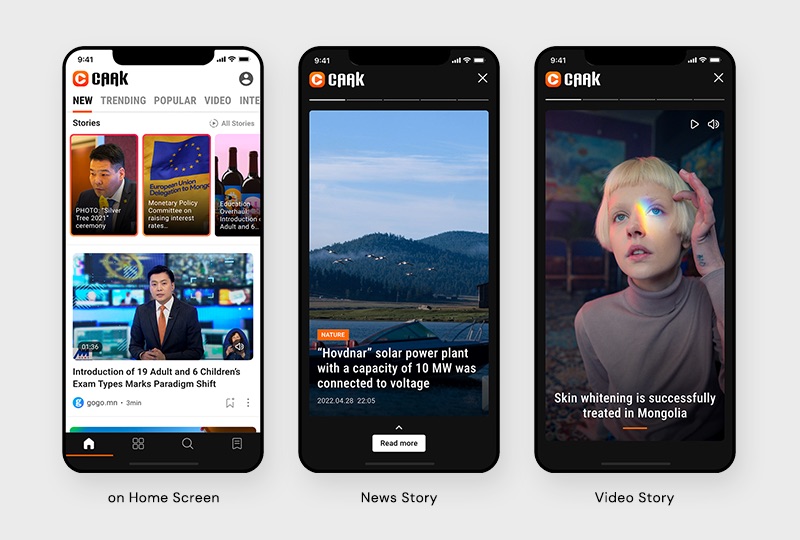
1. News Stories
A lightweight news format for daily and weekly updates, designed to make important stories easier to scan and consume.
Benefits: concise, engaging, and easy to revisit.
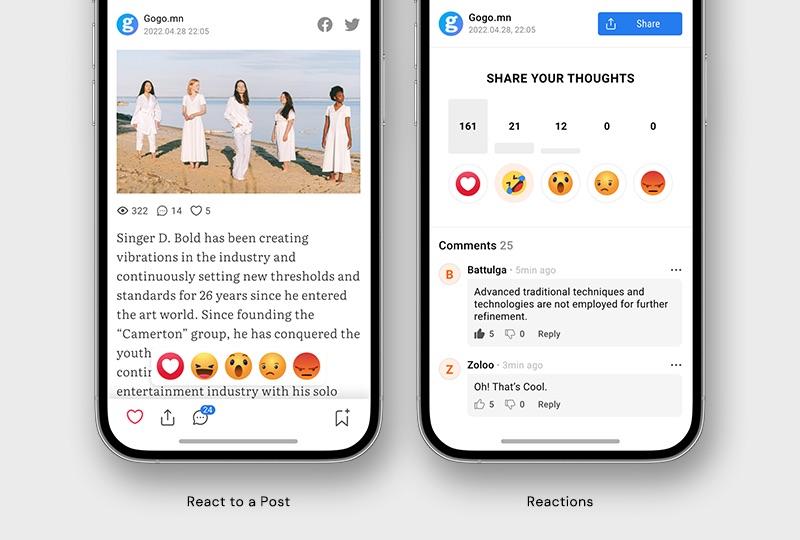
2. Emoji Reactions Instead of Comments
Emoji reactions provide a lightweight way for users to express how they feel about a story without requiring a full comment. They also make audience sentiment more visible and encourage others to participate.
User Validation

Due to time constraints, I created mid-fidelity prototypes and tested them with 6 external users who regularly read news. The sessions focused on identifying usability issues and understanding the context in which users consume and save content.
Key Findings from the Participants
- On the home screen, users wanted to see more news within a limited amount of space.
- The all-stories page felt too dense, and users did not want to browse outdated content from previous months.
- Users preferred saving articles for later rather than reacting to them immediately.
- Users preferred reading related messages and reactions instead of browsing long comment threads.

Design Iteration Based on Research Findings
After testing the prototype with real users, I refined the interface and information hierarchy based on observed behaviors, needs, and decision-making patterns.
Iteration: Post Detail
- Too many emoji options diluted the meaning of the reactions. Limiting the interface to the two most-clicked emojis made sentiment easier to scan.
- Saving a post was difficult to discover. I repositioned the save action and refined its visual treatment to improve discoverability.

App & Dashboard Design
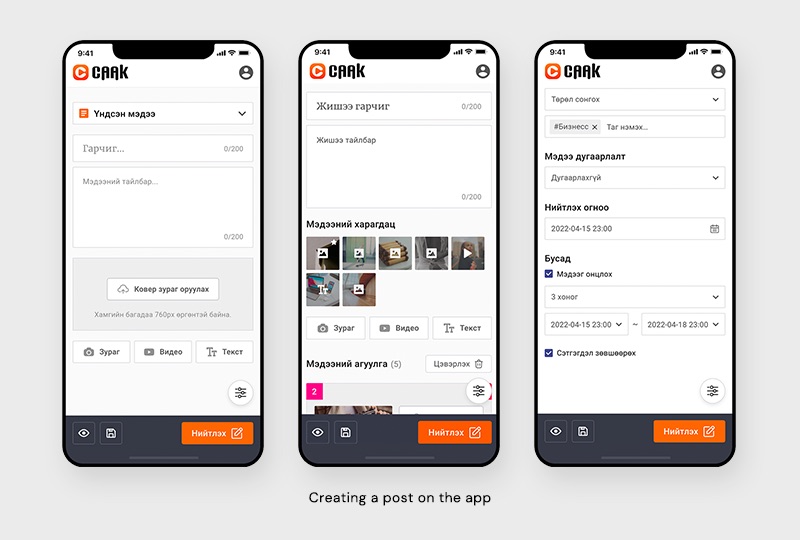
I also designed the creator dashboard used to support content monetization, giving publishers a dedicated space to create articles and track content performance.


Impact
The redesigned website and app improved engagement across the platform. Emoji reactions increased user engagement by 200%, indicating strong adoption of the lightweight interaction. News Stories also gained greater prominence within the news experience, shifting attention toward curated story formats. We continued collecting feedback through Hotjar, where 98% of votes were positive.